
Friday, 9 March 2018

Overview of Internet
Overview of Internet.
Internet is defined as an Information super Highway, to access information over the web. However, It can be defined in many ways as follows:
• Internet is a world-wide global system of interconnected computer networks.
• Internet uses the standard Internet Protocol (TCP/IP).
• Every computer in internet is identified by a unique IP address.
• IP Address is a unique set of numbers (such as 110.22.33.114) which identifies a computer location.
• A special computer DNS (Domain Name Server) is used to give name to the IP Address so that user can locate a computer by a name.
• For example, a DNS server will resolve a name http://www.tutorialspoint.com to a particular IP address to uniquely identify the computer on which this website is hosted.
• Internet is accessible to every user all over the world.
Evolution
The concept of Internet was originated in 1969 and has undergone several technological & Infrastructural changes as discussed below:
• The origin of Internet devised from the concept of Advanced Research Project Agency Network (ARPANET).
• ARPANET was developed by United States Department of Defense.
• Basic purpose of ARPANET was to provide communication among the various bodies of government.
• Initially, there were only four nodes, formally called Hosts.
• In 1972, the ARPANET spread over the globe with 23 nodes located at different countries and thus became known as Internet.
• By the time, with invention of new technologies such as TCP/IP protocols, DNS, WWW, browsers, scripting languages etc.,Internet provided a medium to publish and access information over the web.
Internet is defined as an Information super Highway, to access information over the web. However, It can be defined in many ways as follows:
• Internet is a world-wide global system of interconnected computer networks.
• Internet uses the standard Internet Protocol (TCP/IP).
• Every computer in internet is identified by a unique IP address.
• IP Address is a unique set of numbers (such as 110.22.33.114) which identifies a computer location.
• A special computer DNS (Domain Name Server) is used to give name to the IP Address so that user can locate a computer by a name.
• For example, a DNS server will resolve a name http://www.tutorialspoint.com to a particular IP address to uniquely identify the computer on which this website is hosted.
• Internet is accessible to every user all over the world.
Evolution
The concept of Internet was originated in 1969 and has undergone several technological & Infrastructural changes as discussed below:
• The origin of Internet devised from the concept of Advanced Research Project Agency Network (ARPANET).
• ARPANET was developed by United States Department of Defense.
• Basic purpose of ARPANET was to provide communication among the various bodies of government.
• Initially, there were only four nodes, formally called Hosts.
• In 1972, the ARPANET spread over the globe with 23 nodes located at different countries and thus became known as Internet.
• By the time, with invention of new technologies such as TCP/IP protocols, DNS, WWW, browsers, scripting languages etc.,Internet provided a medium to publish and access information over the web.
Sunday, 4 March 2018
Computer Ethics and Security
Rules of Netiquette
Rule 1: Remember the human
Rule 2: Adhere to the same standards of behavior online that you follow in real life
Rule 3: Know where you are in cyberspace
Rule 4: Respect other people's time and bandwidth
Rule 5: Make yourself look good online
Rule 6: Share expert knowledge
Rule 7: Help keep flame wars under control
Rule 8: Respect other people's privacy
Rule 9: Don't abuse your power
Rule 10: Be forgiving of other people's mistakes
CLICK to know more about rule of netiquette
http://www.albion.com/netiquette/corerules.html
CLICK to know more about rule of netiquette
http://www.albion.com/netiquette/corerules.html
Areas of computer coverage
Information accuracy
do not assume all the information on the web is correct
users should evaluate the value of a web page before relying on its content.
be aware that the organization providing access to the information may not be the creator of the information.

Green computing
Green computing is the environmentally responsible and eco-friendly use of computer and their resources.
involves reducing the electricity and environmental waste while using a computer.
society has become aware of this waste and is taking measures to combat it.

Codes of conduct
written guideline that helps determine whether a specific action is ethical/unethical or allowed/not allowed.

Information privacy
The right of individuals and companies to deny or restrict the collection, use, and dissemination of information about them.
the privacy of personal information and usually relates to personal data stores on computer system.
the need to maintain information privacy is applicable to collectes personal information such as medical records, financial data, criminal records, political records, business related information or website data.
Intellectual property
unique and original works such as ideas, inventions, literary and artistic works, processes, names and logos.
- PATENT.

A set of exclusive rights granted by a government to an inventor or applicant for a limited amount of time
- TRADEMARK
/trademarkregistered-598a056768e1a200116dc33a.jpg)
A word,phrase,symbol,design,combination of letters or numbers or other device that identifies and distinguishes products and services in the marketplace.
- COPYRIGHT

Protection provided to the authors of original works and includes such things as literary,dramatic,musical.artistic and certain other intellectual creations,both published and unpublished
Tuesday, 13 February 2018
Internet service
Internet service
Types of internet service



Types of internet service
1.WORLD WIDE WEB
- Consist of a world wide web collection of electronic documents.
- Web page usually have built-in connections to other documents.
- A web page is a collection of related web pages and associated items, such as documents and pictures,stored on a Web Server.
- Web 2.0 refer to web sites that provide a means for user to share personal information, allow users to modify web sites content and have application software built ino the site for visitors to use.
2.E-MAIL
- Transmission of messages and files via a computer network
- An e-mail adress is a unique name that consist of a user name and domain name that identifies the user.
- User name must be different from the other user names in the same domain.
3.INSTANT MESSANGING
- A real-time internet communication service that notifies you when one or more people are online and allows you to exchange message or files or join a private chat room with them.
- Real time means that you and the people with whom you are conversing are online at the same time.
- Some IM service support voice and video conversation.
4.MESSAGE BOARD
- Message board is type of discussion group.
- A general term for any online "bulletin board" where you can leave and expect to see responses to message you have left.
- A popular Web-based type of discussion group that does not require a news reader.
5.VOICE OVER INTERNET PROTOCOL (VoIP)
- VoIP is a technology for making telephone calls over the internet in which speech sounds and converted into binary data.
- Also called Internet Telephony
- VoIP service are also available on some mobile services that have wireless Internet service
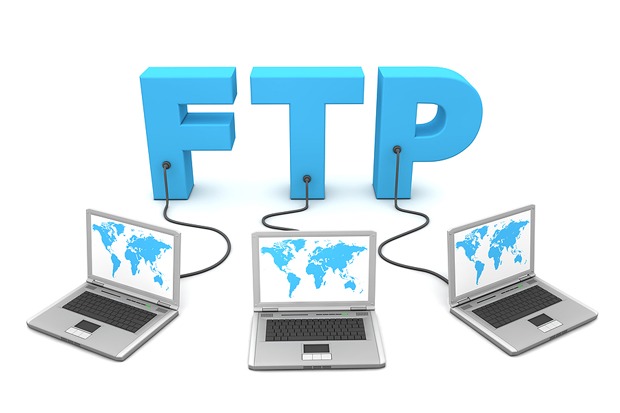
6.FILE TRANSFER PROTOCOL (FTP)
- FTP is one method, users have to transfer webpages files from their lacal machine to the server.
- An FTP server is a computer that allows users to upload or download file using FTP.
- Some example of FTP programs are Smarter FTP and Internet Explorer.
Tuesday, 30 January 2018
Web Searching
WEB SEARCHING
A primary reason that people use the Web is to search for specific infirmation, including text, pictures, music and video
Types of search tools
A primary reason that people use the Web is to search for specific infirmation, including text, pictures, music and video
Types of search tools
| Search engine (keyword search) | Subject directory (directory search) |
|---|---|
| Finds information related to a specific topics | Classifies Web pages in an organized set of categories |
Search engine
- a program that searches documents for specified keywords and returns a list of the documents where the keywords were found.
- requires the user to enter a word or phrase, called search text or search query.
- each word of the search text is known as keyword.
Subject directory
- Classifies Web pages in an organized set of categories such as sport or shopping and related subcategories.
- Examples of search tools:
1. AltaVista,
2. Yahoo!,
3. Google,
4. Excite
- A subject directory provides categorized lists of links arranged by subject
- When click on the category link, the subject directory displays a list of subcategory links
- The disadvantage – users have difficulty deciding which categories to choose as the menus of links presented
Tuesday, 23 January 2018
ADVANTAGES AND DISADVANTAGES EXTRANET
advantages and disadvantages of extranet
| ADVANTAGES | DISADVANTAGES |
|---|---|
| Exchange large volume of data using electronic data interchange. | Security of extranrts can be a concern when hosting valuable or propriety information. |
| Share product catalogs exclusively with trade. | Extranet can be expensive to implement and maintain within an organization. |
ADVANTAGES AND DISADVANTANGES OF INTRANET
Advantanges and Disadvantages of Intranet
| ADVANTAGES | DISADVANTAGES |
|---|---|
| Commercial or confidential data is kept secure within the organization. | High financial cost incurred by the company when initially implementing the internet. |
| Email remain private and may also be encrypted. | Connections between an intranet and internet potentially compromises security, by alloeing virus infection or system hacking . |
| High bandwidth. No connection limits unlike the internet. | Staff needs training to ensure workers know how to use the system effectively. |
| Reliable. The company will have dedicated IT personal to keep things running smoothly. | Information overload is another disadvantage because it reduce productivity. |
Subscribe to:
Posts (Atom)
Type of Website
PORTAL A web site that offers variety of internet services from single, convenient location. Example : Yahoo.com, MSN.com ...

-
NETWORK TOPOLOGY Network topology is the arrangement of the various elements of a communication network. Network topology is the t...
-
advantages and disadvantages of extranet ADVANTAGES DISADVANTAGES Exchange large volume of data using electronic data interchange. Secu...
-
Client-server Peer-to-peer For medium and large network For small network fewer than 10 computer Needs training Does not needs trai...
